Bebé – por Dr. Katherine Bennett – 14 julio 2026
When Do Babies Say Their First Word? Early Communication Milestones
Hearing a baby’s first word is one of the most memorable moments of early parenthood. For months, your baby has communicated through cries, facial expressions, body movements, coos, and babbling. Then one day, a familiar sound seems to carry a clear meaning: “Mama,” “Dada,” “ball,” “bye,” or another word connected to daily life.
Many babies say their first meaningful word around 12 months, although there is a wide normal range. Some use a recognizable word before their first birthday, while others need more time. Long before spoken words appear, babies are already building communication skills through listening, eye contact, gestures, imitation, turn-taking, and shared attention.
This guide explains when babies usually say their first word, what counts as a real word, the communication milestones that come before talking, simple ways parents can encourage language development, and when to ask a pediatrician or speech-language professional for support.
Quick Answer: When Do Babies Say Their First Word?
Many babies say their first meaningful word at around 12 months. Some begin between 9 and 11 months, while others may not use clear words until 13 to 15 months.
Before a first word appears, babies usually move through several communication stages:
Birth to 3 months: Crying, calming to familiar voices, cooing, and early social smiles
4 to 6 months: Vocal play, laughter, squeals, and early babbling
7 to 9 months: Repeated sounds such as “ba-ba” or “ma-ma,” stronger turn-taking, and name recognition
9 to 12 months: Gestures, pointing, waving, varied babbling, and understanding familiar words
Around 12 months: One or more sounds used consistently with a clear meaning
12 to 18 months: A gradually expanding vocabulary and stronger understanding of simple directions
These ages are general guides. Parents should look at the full communication picture rather than one date on a calendar.
What Counts as a Baby’s First Word?
A baby’s first word does not need to sound perfectly clear. “Ba” may mean ball, “wa-wa” may mean water, and “da” may refer to a family dog. Early words are often shortened or simplified because babies are still learning how to coordinate the lips, tongue, jaw, breath, and voice.
A sound is more likely to count as a word when it has four qualities:
1. It Has Meaning
Your baby connects the sound with a particular person, object, action, or event. For example, they say “ba” while looking at or reaching for a ball.
2. It Fits the Context
The sound appears at an appropriate time. Saying “bye” while someone leaves is more meaningful than making the same sound randomly during play.
3. It Is Used Consistently
Your baby uses roughly the same sound for the same meaning on multiple occasions. It does not have to happen every time, but there should be a recognizable pattern.
4. It Is Communicative
Your baby looks toward another person, gestures, waits for a response, or clearly seems to be sharing a message.
Repeated babbling such as “ma-ma-ma” is important practice, but it may not count as “Mama” until your baby uses it specifically to refer to a parent.
Understanding Comes Before Speaking
Babies usually understand more language than they can say. This is the difference between receptive language and expressive language.
Receptive language is what a baby understands.
Expressive language is how a baby communicates through sounds, gestures, signs, and words.
A baby may understand their name, recognize “milk,” look toward the dog when it is named, or respond to “come here” before they can say any of those words.
This gap is normal. Speech requires many physical skills, while understanding begins through repeated listening and association. When parents name familiar people, objects, and actions during everyday routines, they help build the understanding that supports future speech.
Baby Communication Timeline by Age
Age Range
Communication Skills
How Parents Can Respond
Birth to 3 months
Cries differently for different needs, calms to familiar voices, coos, smiles
Talk face-to-face, imitate sounds, and respond warmly to cries and expressions.
4 to 6 months
Laughs, squeals, plays with pitch, begins consonant-like sounds
Copy sounds, sing songs, and pause as though having a conversation.
7 to 9 months
Repeats syllables, responds to tone, may recognize name, uses vocal turn-taking
Name familiar objects and respond to babbling as meaningful communication.
9 to 12 months
Uses gestures, follows attention, varies babbling, understands familiar words
Point, label, wave, read simple books, and follow the baby’s interests.
12 to 15 months
May use first words, imitate simple words, follow familiar one-step directions
Repeat useful words in daily routines without pressuring the baby to copy.
15 to 18 months
Vocabulary may begin growing, gestures and words work together
Expand single words into short phrases and offer simple choices.
Language development is not perfectly linear. A baby may focus on crawling or walking for several weeks and appear to make less progress with speech. Skills often grow in bursts rather than at a steady daily pace.
Birth to 3 Months: Communication Begins Before Words
Newborn communication starts with cries, body movements, facial expressions, and changes in alertness. Crying may signal hunger, fatigue, discomfort, overstimulation, or a need for closeness.
During the first months, babies begin to:
Quiet or become alert when they hear a familiar voice
Look toward faces
Make soft vowel-like sounds
Smile during social interaction
Move their arms or legs in response to excitement
Take brief vocal turns with a caregiver
Parents support this stage by responding. When your baby coos and you answer, they begin learning a basic communication rule: sounds can bring another person into the interaction.
4 to 6 Months: Vocal Play and Early Babbling
Between 4 and 6 months, babies often become more playful with their voices. They may squeal, growl, blow bubbles, laugh, and experiment with volume and pitch.
Early babbling may include sounds made with the lips, such as “b,” “m,” and “p,” or sounds produced farther back in the mouth, such as “g” and “k.”
At this stage, the goal is not to teach specific words. Your baby is learning how their voice works and how other people respond to it.
Helpful interactions include:
Imitating your baby’s sounds
Waiting for your baby to answer
Using expressive facial movements
Singing songs with repeated sounds
Narrating simple routines
A diaper change is an easy opportunity for language practice. When supplies are organized on a portable changing table, parents can stay face-to-face and describe what is happening: “Diaper off. Wipe. Clean diaper. All done.”
7 to 9 Months: Repeated Sounds and Social Turn-Taking
During this stage, babbling often becomes more organized. Your baby may repeat syllables such as “ba-ba-ba,” “da-da-da,” or “ma-ma-ma.” This is called repeated or reduplicated babbling.
Babies also begin to notice the rhythm of conversation. They may make a sound, pause, look at you, and wait. When you respond, they vocalize again.
This back-and-forth exchange matters because communication is social. Babies learn language through responsive interaction, not simply by hearing a large number of words in the background.
You may also notice your baby:
Turning when their name is called
Responding differently to friendly and firm tones
Watching your mouth while you speak
Copying simple facial expressions
Using sounds to get attention
Protesting when an activity stops
9 to 12 Months: Gestures Build the Bridge to Words
Before babies can say many words, they often communicate with gestures. Gestures reduce frustration and show that the baby understands communication has a purpose.
Common early gestures include:
Reaching to be picked up
Waving
Pointing
Holding out an object
Shaking the head
Clapping
Looking back and forth between a person and an object
One especially important skill is shared or joint attention. This happens when the baby and caregiver focus on the same object or event. Your baby may look at a toy, look at you, and then look back at the toy. This creates a perfect opportunity to attach a word to the shared experience.
For example, if your baby looks at a dog, you can say, “Dog! Big dog. The dog is running.” The baby already cares about the subject, making the language more meaningful.
The Communication Triangle: Attention, Intention, and Repetition
Parents often focus on pronunciation, but three earlier skills provide more useful clues about communication development.
Attention
Does your baby notice voices, faces, sounds, and interesting objects? Can they share attention with another person, even briefly?
Intention
Does your baby communicate for a reason? They may reach, vocalize, point, look, protest, or offer an object to request or share something.
Repetition
Does your baby repeat sounds, gestures, or communication patterns? Repetition helps turn an accidental sound into a meaningful signal and eventually into a word.
A first word often appears when all three come together: your baby notices an object, wants to communicate about it, and repeats a familiar sound connected to it.
How Parents Can Encourage First Words
Follow Your Baby’s Lead
Talk about what your baby is already watching, touching, or doing. If they are looking at a spoon, name the spoon. If they drop a toy, say “down.” Language is easier to learn when it matches the baby’s current attention.
Comment More and Test Less
Parents may repeatedly ask, “What is this?” or “Can you say ball?” Too many questions can make interaction feel like a test.
Use more comments instead:
“Red ball.”
“The ball bounced.”
“You found the ball.”
Your baby can listen without the pressure to perform.
Use Short, Clear Phrases
Babies benefit from hearing normal language, but a few emphasized words can make meaning easier to notice.
Instead of saying, “I think it might be time for us to go upstairs and get ready for your bath,” you might say, “Bath time. Let’s go upstairs.”
Pause and Wait
After you speak, leave a few seconds of quiet. Babies need more processing time than adults. A pause gives them an opportunity to look, gesture, smile, or vocalize.
Imitate and Expand
If your baby says “ba,” you can respond, “Ba! Ball.” If they say “da” while looking at a dog, say, “Dog. Yes, dog!”
This shows your baby that their attempt was heard and gives them a slightly clearer model.
Build Language Into Daily Routines
Parents do not need special lessons or expensive toys. Repeated daily routines offer some of the best language-learning opportunities because babies know what to expect.
During Diaper Changes
Name body parts, clothing, and actions: “Feet up. Clean diaper. Pants on.” Organized diaper changing tables can help caregivers keep supplies close and maintain eye contact instead of turning away to search for items.
During Feeding
Use words such as “milk,” “more,” “all done,” “spoon,” and “cup.” Respond to your baby’s looks, reaches, and sounds as communication.
During Bath Time
Repeat simple action words: “Wash,” “splash,” “pour,” and “dry.” Songs and repeated phrases work especially well in predictable routines.
Before Sleep
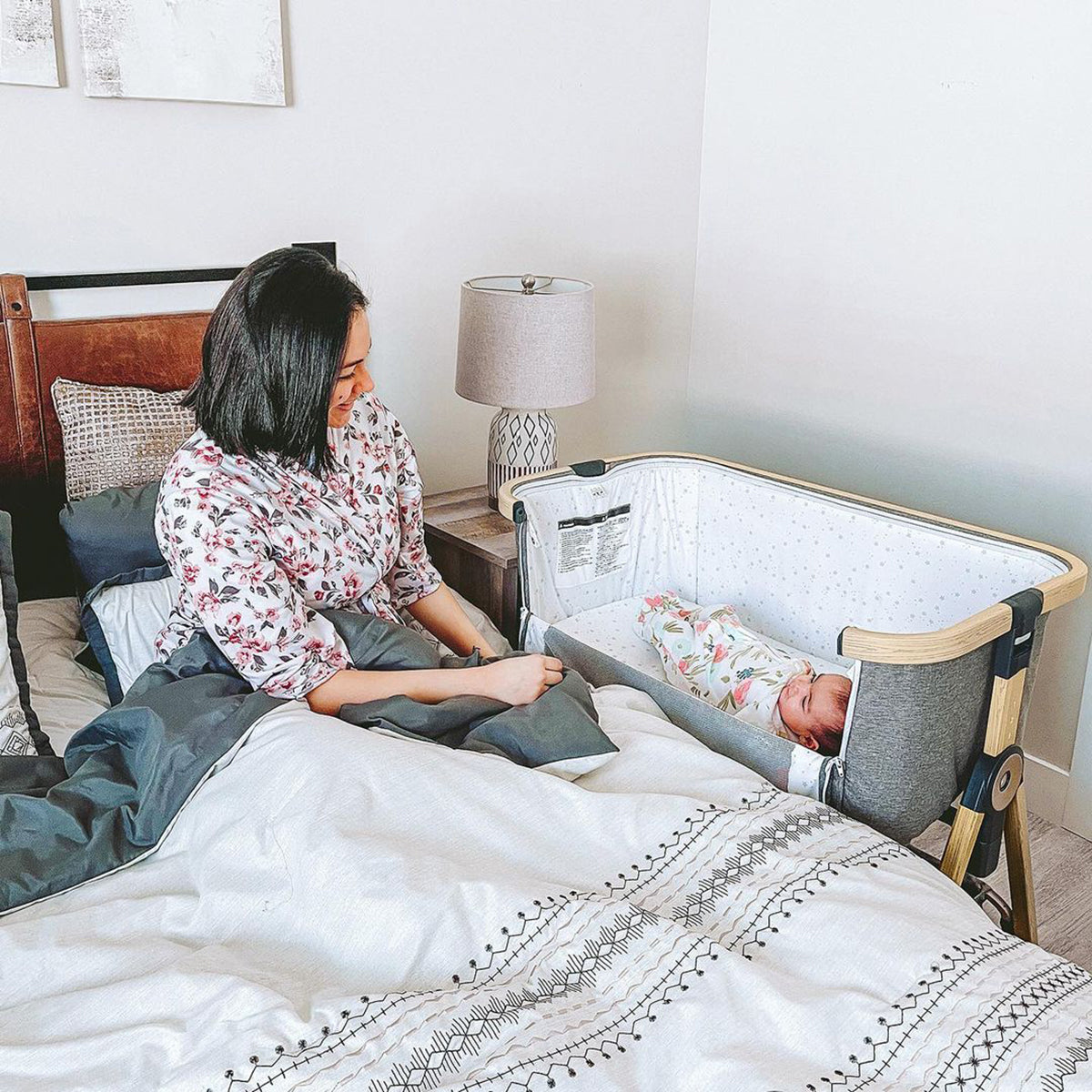
Read a short book, sing the same song, or repeat a familiar bedtime phrase. If your baby sleeps in a nearby smart baby crib, quiet bedtime interaction can include naming familiar objects, responding to gentle babbling, and ending with a consistent phrase such as “Good night. Time to sleep.”
Reading With a Baby Who Cannot Talk Yet
Babies do not need to understand a complete story to benefit from books. Early reading is about shared attention, rhythm, pictures, repetition, and connection.
Try these approaches:
Let your baby touch and turn sturdy pages.
Name one or two pictures instead of reading every sentence.
Use animal sounds and expressive voices.
Pause when your baby looks or vocalizes.
Read favorite books repeatedly.
Stop when your baby loses interest.
Repetition is valuable. Adults may become tired of the same book, but babies learn through hearing familiar words in predictable contexts.
Can Baby Sign Language Delay Speech?
Simple gestures or signs can give babies a way to communicate before speech is available. Families may introduce signs for practical words such as “more,” “milk,” “eat,” “all done,” or “help.”
Using signs alongside spoken words does not mean parents should stop talking. Say the word while making the gesture, then respond when the baby attempts either form.
A gesture is communication, not a failure to speak. For many babies, gestures reduce frustration and strengthen the understanding that symbols can carry meaning.
Language Development in Bilingual Homes
Babies can learn more than one language. Exposure to multiple languages does not automatically cause a speech delay.
A bilingual baby may divide vocabulary across languages. For example, they may know the word for dog in one language and the word for milk in another. Count meaningful words across all languages when considering total vocabulary.
Parents should usually speak the language they use most naturally and confidently. Rich, warm interaction is more valuable than forcing a language a caregiver does not feel comfortable speaking.
Consistency can help, but families do not need a rigid system. Some use one language at home and another outside. Others use different languages with different caregivers or mix languages naturally.
Background Noise, Screens, and Conversation
Babies learn language best through responsive human interaction. Television, videos, and background audio may contain many words, but they cannot reliably follow a baby’s gaze, answer a sound, or adjust to the baby’s interest.
To make communication easier:
Turn down background television during play and meals.
Move close enough for your baby to see your face.
Use pauses so your baby can take a turn.
Choose short periods of focused interaction over constant narration.
Let quiet moments happen.
Parents do not need to talk every second. Babies also need time to observe, experiment with sounds, and initiate interaction.
What Are Common First Words?
First words are often connected to people, routines, favorite objects, foods, animals, or social actions.
Common examples include:
Mama
Dada
Hi
Bye
No
More
Milk
Ball
Dog
Up
Sound effects may also function like words when used consistently. “Woof” for dog, “vroom” for car, or “uh-oh” after something falls can all carry clear meaning.
When Should Parents Ask for Help?
Development varies, and one late milestone does not necessarily indicate a disorder. However, communication concerns deserve attention because hearing, social interaction, motor development, and language are closely connected.
Talk with your pediatrician if your baby:
Does not react to loud sounds or familiar voices
Rarely looks toward faces or voices
Does not coo or make many sounds during the early months
Is not babbling with consonant sounds by around 9 months
Does not respond to their name consistently by around 9 to 12 months
Uses few gestures, such as reaching, waving, or pointing, near the first birthday
Does not appear to understand familiar words or routines
Has no meaningful words by around 15 months
Has feeding or oral-motor difficulties alongside communication concerns
Loses sounds, gestures, eye contact, or words previously used
Loss of an existing communication skill should be discussed promptly. Parents can also request a hearing evaluation because even mild or temporary hearing difficulties may affect access to speech sounds.
Track Communication Quality, Not Only Word Count
Word count is useful, but it is only one part of communication. A baby with no spoken words yet may still show strong progress through gestures, understanding, imitation, and shared attention.
Skill to Observe
Examples of Progress
Listening
Turns toward voices and notices changes in tone
Understanding
Recognizes names, objects, routines, or simple requests
Social interaction
Smiles, takes turns, seeks attention, and shares enjoyment
Gestures
Reaches, points, waves, gives objects, or raises arms
Vocal development
Moves from cooing to repeated and varied babbling
Intent
Uses sounds or actions to request, protest, greet, or share
A short video of natural play can help a pediatrician or speech-language pathologist understand how your baby communicates. Record normal interaction rather than repeatedly asking your baby to perform.
Common Mistakes to Avoid
Pressuring your baby to repeat words: Model the word and keep the interaction enjoyable.
Correcting every sound: Early pronunciation is expected to be incomplete.
Talking without pausing: Babies need time to respond.
Focusing only on spoken words: Gestures, understanding, and turn-taking also matter.
Comparing babies too closely: Language growth varies widely.
Using screens as the main language activity: Responsive conversation provides richer learning.
Waiting after skill loss: Tell your pediatrician if communication abilities disappear.
Final Thoughts
Many babies say their first meaningful word around 12 months, but communication begins long before that moment. Crying, smiling, eye contact, cooing, babbling, gestures, imitation, shared attention, and understanding are all steps toward spoken language.
A true first word has meaning, fits the situation, and is used consistently. It does not need perfect pronunciation. A sound such as “ba” can count if your baby regularly uses it to mean ball.
Parents can support early language by following the baby’s attention, responding to sounds and gestures, using short phrases, pausing for turns, reading, singing, and talking during everyday routines. Warm, responsive interaction matters more than flashcards, complicated lessons, or constant testing.
If your baby is not babbling, responding to sounds, using gestures, understanding familiar language, or attempting meaningful words within the expected range, bring the concern to your pediatrician. Early evaluation can provide reassurance, identify hearing concerns, or connect families with helpful support.
FAQ: Baby’s First Words and Communication
When do babies usually say their first word?
Many babies say their first meaningful word around 12 months. Some begin earlier, while others may start closer to 13 to 15 months.
Does “Mama” count as a first word?
It counts when your baby uses the sound consistently and meaningfully to refer to their mother. Random or repeated “ma-ma-ma” babbling may still be sound practice rather than a true word.
Does a first word need to be pronounced correctly?
No. Early words are often shortened or simplified. A sound counts when it has a clear meaning and is used consistently in the right context.
What comes before a baby’s first word?
Early communication skills include eye contact, social smiling, cooing, babbling, turn-taking, responding to a name, gestures, pointing, shared attention, and understanding familiar words.
How can I encourage my baby to talk?
Follow your baby’s interests, imitate their sounds, use short phrases, pause for a response, name familiar objects, read simple books, sing songs, and talk during daily routines.
Do gestures count as communication?
Yes. Reaching, pointing, waving, giving objects, and raising the arms all communicate meaning and help build the foundation for spoken words.
Does learning two languages delay first words?
Exposure to two languages does not automatically cause a speech delay. Count meaningful words across both languages and focus on rich, responsive interaction.
When should I worry if my baby is not talking?
Ask your pediatrician if your baby is not babbling by around 9 months, uses few gestures near 12 months, has no meaningful words by around 15 months, does not respond to sounds or their name, or loses communication skills.