A nursery can look spacious and organized while still placing a crib too close to a monitor cord, positioning a changing table where a door blocks the caregiver, or leaving a dresser unsecured beside an increasingly mobile baby.
Safe nursery furniture placement is less about creating a perfectly symmetrical room and more about controlling hazards. The most important questions are: What can the baby eventually reach? What can fall, tip, heat up, or create an entanglement risk? Can an adult move through the room safely while carrying the baby?
This guide focuses specifically on furniture clearances, hazard zones, and movement paths. For floor plans based on actual room dimensions, see our guide to 6×8, 8×10, and shared-room nursery layouts.
Quick Nursery Clearance Guide
| Item or Hazard | Placement Guidance |
|---|---|
| Baby monitor and electrical cords | Keep cords at least 3 ft (91 cm) from any part of the crib, bassinet, play yard, or other infant sleep space. |
| Window and blind cords | Place the sleep space away from the window, preferably on another wall. Use cordless window coverings whenever possible. |
| Radiators and heaters | Keep the sleep space outside the appliance's heat and clearance zone according to its manufacturer. Avoid direct radiant heat. |
| Regular freestanding bassinet | Use it as an independent sleep surface. Do not improvise an attachment to an adult bed. |
| Approved bedside sleeper | Secure it exactly as instructed. The allowable gap is governed by the product standard and instructions; bedside-sleeper warnings specify no more than 1/2 in (13 mm). |
| Changing table | Use a stable product with the required guard structure and enough adult standing space to remain beside the baby throughout the change. |
| Dresser and bookcase | Anchor according to the manufacturer's anti-tip instructions rather than relying on furniture weight alone. |
| Walking path | Keep the crib-to-changing-area-to-door route clear enough to walk normally while carrying the baby. |
Some nursery hazards have specific measurements. Others do not. Avoid treating unofficial internet rules such as “always leave 12 inches behind the crib” as universal safety standards unless that distance appears in the specific product instructions.
Start With Hazard Zones Before Choosing Furniture Positions
Before deciding where the crib looks best, mark areas of the room that place limitations on furniture placement.
Identify:
- Windows and window-covering cords
- Electrical outlets and power cords
- Baby monitor cables
- Radiators, baseboard heaters, and space heaters
- Air-conditioning vents
- Doors and their full swing
- Closet doors
- Wall-mounted shelves and heavy decorations
- Unanchored dressers or bookcases
The safest crib wall may not be the longest or most attractive wall. Establish the hazard-free sleep area first and design the rest of the nursery around it.
Crib Placement: What Needs to Stay Away?
Keep the Crib Away From Window-Covering Cords
Window cords create a strangulation hazard as babies become able to roll, reach, sit, stand, and climb.
The safest approach is to place the crib on another wall when possible. Cordless window coverings are preferable in any room used by young children.
If a window is near the only practical crib location, do not assume that tying a looped cord beside the window makes the setup safe. Reevaluate the window treatment itself and make sure all components remain inaccessible as the child grows.
Do Not Use the Window as a Headboard
Placing a crib directly beneath a window can introduce several issues at once:
- Window-covering cords
- Curtain fabric
- Direct sunlight
- Drafts
- A future climbing route to the window
When another wall is available, it is generally the cleaner placement choice.
Keep Monitor Cords at Least 3 Feet Away
This is one nursery clearance that has a clear numeric recommendation.
All baby monitor cords and other electrical cords should remain at least 3 feet (91 cm) away from every part of the crib, bassinet, play yard, or other infant sleep environment.
This includes:
- Monitor cameras mounted on the wall
- Power cables running behind furniture
- Extension cords
- Phone chargers
- Lamp cables
Consider where the cord will hang if it loosens from a clip. Measuring only the camera's distance from the crib is not enough if several feet of power cable can fall toward the mattress.
Never Mount the Monitor on the Crib
A monitor should not sit on a crib rail or inside the crib. Use a stable location that keeps the entire device and cord outside the baby's reach.
How Far Should a Crib Be From the Wall?
There is no universal rule requiring every standard crib to sit a specific number of inches away from a plain wall.
In many rooms, a properly assembled crib can sit against an appropriate wall when the crib manufacturer permits that placement. What matters is what exists on, beside, above, and behind that wall area.
Check for:
- Reachable cords
- Electrical equipment
- Loose wall coverings
- Unsecured artwork
- Nearby furniture the child may eventually reach
- Heating equipment
Avoid intentionally creating a narrow gap between the crib and another piece of furniture that can collect objects or become an entrapment area.

Keep the Crib Away From Heat Sources
A crib should not sit directly beside a radiator, portable heater, fireplace, or other concentrated heat source.
There is no single clearance number that applies to every heating appliance. Instead, follow the heater or radiator manufacturer's required clearance zone and keep the infant sleep surface outside direct radiant heat.
Also avoid:
- Placing a portable heater where its cord approaches the crib
- Pointing a strong heating vent directly at the sleep space
- Positioning the crib where prolonged direct sunlight creates a hot sleeping area
Parents concerned about heat exposure can review the warning signs and response steps in our guide to newborn overheating.
Do Not Treat Furniture as a Barrier Around the Crib
It can be tempting to place a dresser, storage cube, or chair tightly beside the crib to maximize floor space. Think about the room from the perspective of an older, standing baby before doing so.
A nearby furniture surface may eventually provide access to:
- Diaper creams
- Wipes and plastic packaging
- Lamps
- Picture frames
- Monitor cords
- Small objects
Keep objects that could fall or be pulled into the crib outside the child's future reach.
Bassinet Placement: Freestanding vs. Bedside Sleeper
The terms “bassinet” and “bedside sleeper” are sometimes used casually as though they are interchangeable. Their placement requirements can be different.
Freestanding Bassinet
A standard freestanding bassinet is designed to function as its own sleep product.
Place it:
- On a stable, level floor
- Away from curtains and cords
- Away from concentrated heat sources
- Where an adult can approach without stepping around clutter
- Where blankets from the adult bed cannot fall into the bassinet
Do not remove a side, wedge the bassinet against the adult mattress, or use straps to create an improvised bedside sleeper.
Approved Bedside Sleeper
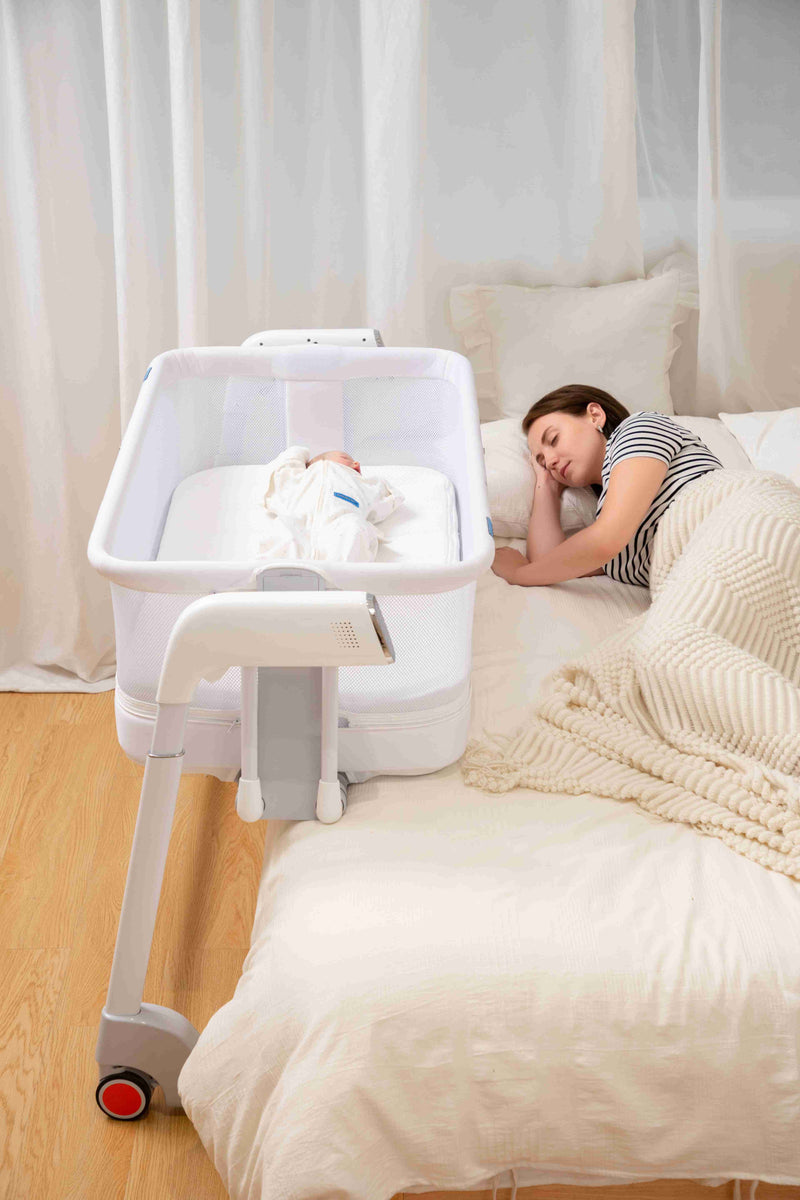
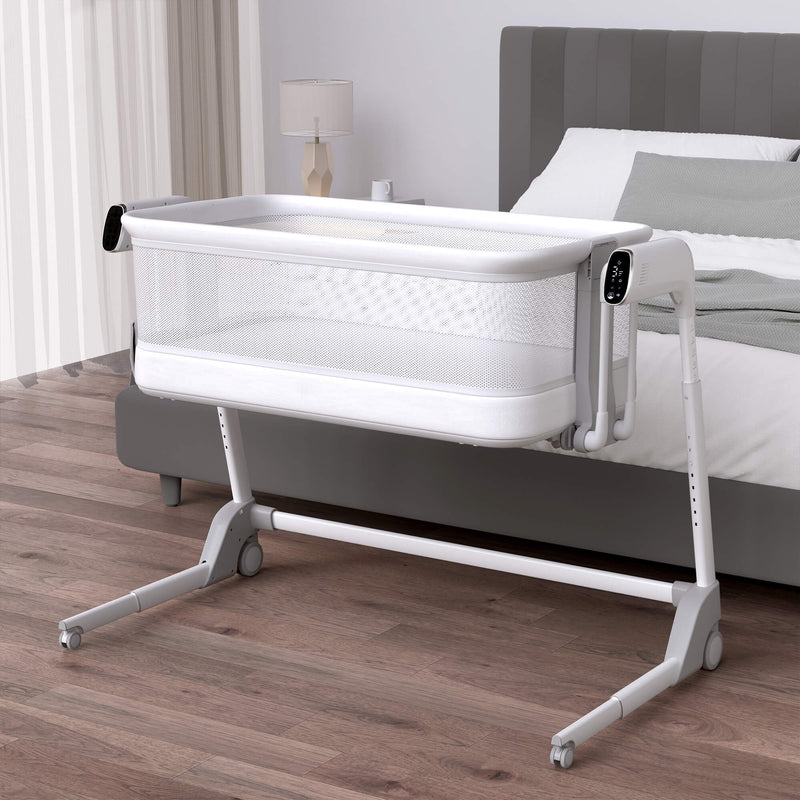
A bedside sleeper is specifically designed and tested to be secured to an adult bed.
It must be attached using the product's intended system and used only with adult-bed configurations permitted by the manufacturer.
Bedside-sleeper safety requirements address the gap between the infant product and the adult mattress. Product warnings specify that this gap should not exceed 1/2 inch (13 mm) when the sleeper is properly secured.
Never fill a larger gap with:
- Pillows
- Blankets
- Rolled towels
- Foam
- Other padding
If the product cannot be attached within its permitted configuration, use another approved sleep arrangement.
Families considering a compact bedside sleep setup can explore a smart bassinet while checking the specific product's installation, mode, age, weight, and developmental limits.
Keep Adult Bedding Away From a Bassinet
Room sharing does not mean that the baby's sleep surface should overlap with the adult bed.
Position the bassinet so that:
- Adult pillows cannot fall inside
- The comforter cannot drape over the side
- Phone chargers remain out of reach
- Bedside lamps cannot fall toward the baby
- There is enough adult standing space to lift the baby safely
Pay particular attention to thick comforters that hang significantly beyond the adult mattress edge.
Changing Table Placement: Build an Adult Reach Zone
The changing area has a different safety priority from the crib. The goal is to let the caregiver complete the entire diaper change without stepping away from the baby.
AAP guidance recommends a sturdy changing surface with a guardrail at least 2 inches (5 cm) high around all four sides. Use the provided restraint system, while continuing to keep a hand on the baby.
Everything Needed for One Change Should Be Reachable
Before deciding where the changing table goes, stand in the position where you would change the baby.
You should be able to reach:
- Clean diaper
- Wipes
- Barrier cream
- Clean clothing
- Burp cloth or towel
- Disposal container
Supplies should remain within adult reach but move out of the child's reach as mobility develops.
Do Not Position the Changer Where a Door Hits It
Open the nursery and closet doors completely while testing the changing station.
The caregiver should never need to:
- Close the room door to stand at the table
- Turn sideways during a diaper change
- Step into the doorway to access supplies
- Walk away to open a blocked drawer
A portable changing table can provide more positioning flexibility in rooms where a permanent dresser blocks the main movement path.
Changing Table vs. Crib: How Close Should They Be?
There is no universal mandatory number of inches that must separate a crib and changing table.
They can be located in the same functional zone, but parents should consider what the changing station will contain when the baby becomes mobile.
A changer immediately beside a crib may eventually allow a standing baby to reach:
- Diaper packaging
- Wipe containers
- Cream tubes
- Clothing
- Lamps
- Other small objects
Leave enough separation or use storage that prevents the child from reaching these items through or over the crib side.
For a broader comparison of connected furniture and independent pieces, see our guide to cribs with changing tables vs. separate changing tables.
Anchor Dressers, Bookcases, and Storage Furniture
A dresser may appear impossible for a newborn to tip. Nursery furniture should still be planned for the child who will eventually crawl, pull up, open drawers, and climb.
Use the manufacturer's anti-tip hardware to secure dressers, bookcases, and other appropriate storage furniture to the wall.
Do not rely on:
- The weight of the dresser
- Keeping heavy items inside
- Pushing furniture tightly against the wall
- Assuming a toddler will not climb
Keep tempting objects such as toys and electronics off the top of furniture that a child may later attempt to climb.
Avoid Heavy Objects Above the Crib and Changing Area
Decorating the wall above the crib may look attractive, but heavy or poorly secured objects create unnecessary risk.
Be cautious with:
- Heavy framed mirrors
- Floating shelves holding objects
- Large framed artwork
- Decorative signs
- Planters
- Objects attached only with light adhesive
If wall decor is used elsewhere in the room, secure it according to the mounting system and wall type. Keep hanging cords, ribbons, garlands, and strings outside the baby's reach.

Plan a Clear Nighttime Movement Path
The safest-looking furniture arrangement may still be inconvenient when a caregiver enters the nursery half awake while carrying a baby.
Test three routes:
- Door to crib or bassinet
- Sleep space to changing area
- Changing area back to sleep space or exit
The route should remain free from:
- Ottomans
- Floor baskets
- Loose rugs that slide or curl
- Charging cables
- Extension cords
- Diaper bags
- Portable heaters
- Open drawers
Is There a Required Nursery Walkway Width?
There is no single CPSC or pediatric clearance measurement that applies to every nursery walking path.
Instead of inventing a universal number, perform a practical test:
- Can you walk normally while holding something with both arms?
- Can another adult pass without contacting the crib?
- Can every door open fully?
- Can dresser drawers open without trapping the caregiver?
- Can you reach the baby without stepping over anything?
If you need to turn sideways or move furniture every time you carry the baby through the room, the layout needs more clearance.
Leave Space for Furniture Movement
Gliders and recliners require a larger operating area than their stationary product dimensions suggest.
Before placing one beside a crib, extend or rock the chair through its complete movement range.
Confirm that it cannot:
- Strike the crib
- Pinch a cord
- Block the nursery door
- Prevent dresser drawers from opening
- Move into the changing area
Use the manufacturer's required wall clearance for a recliner rather than guessing from the chair's closed dimensions.
Recheck Clearances as the Baby Becomes Mobile
A nursery designed for a sleeping newborn can develop new hazards once the baby can reach through crib rails, crawl toward furniture, or pull up to stand.
Reevaluate the layout when your baby begins:
- Rolling
- Sitting
- Crawling
- Pulling to stand
- Reaching over crib rails
Check whether the child can now access:
- Monitor cords
- Window coverings
- Changing supplies
- Wall decorations
- Drawer handles
- Bookshelves
- Electrical outlets
Furniture placement should evolve with the baby's reach, not remain frozen in the newborn configuration.
Use a Hazard-Based Nursery Placement Checklist
Crib or Bassinet
- Approved infant sleep product assembled correctly
- Away from window-covering cords
- Monitor and electrical cords at least 3 feet away
- Away from concentrated heat sources
- No heavy objects positioned where they could fall into the sleep space
- No accessible items on neighboring furniture
- Clear adult approach path
Changing Area
- Stable changing surface
- Appropriate guard structure
- Required restraint system functioning
- All immediate supplies within adult reach
- Supplies outside the child's reach
- Enough room for the caregiver to remain beside the baby
- No interference from doors or drawers
Storage Furniture
- Anchored according to manufacturer instructions
- No climbing temptations on top
- Drawers can open without blocking the main route
- No heavy items stored where they can fall toward the crib
Room Circulation
- Door opens fully
- Closet remains accessible
- Nighttime path is clear
- No extension cords across walking areas
- Chair movement does not enter the crib or changing zone
Common Nursery Placement Mistakes
- Searching for one universal crib-to-wall distance: Focus on the actual hazards around that wall.
- Measuring the monitor instead of its cord: The entire cord must remain outside the 3-foot zone.
- Placing the crib under a corded window: Moving the sleep space to another wall is preferable.
- Treating an ordinary bassinet as a bedside sleeper: Only products designed for bedside attachment should be secured to an adult bed.
- Filling a bedside gap with blankets: Never use soft material to correct an improper bedside-sleeper installation.
- Putting changing supplies immediately beside the crib: Consider what a standing baby will eventually reach.
- Leaving dressers unanchored: Install the supplied anti-tip system.
- Ignoring chair movement: Test gliders and recliners through their complete range.
- Creating a narrow nighttime route: Parents should be able to walk normally while carrying the baby.
- Planning only for newborn reach: Reevaluate the layout as mobility develops.
Final Thoughts
Safe nursery furniture placement starts with hazards rather than aesthetics. Identify windows, cords, heat sources, doors, and furniture that requires anchoring before deciding where the crib will become the visual focal point.
Keep baby monitor and other electrical cords at least 3 feet from the crib, bassinet, or other infant sleep space. Keep cribs away from window-covering cords and preferably away from the window itself. Use the manufacturer's clearance requirements around heaters, recliners, and other equipment instead of relying on generic online measurements.
Standard bassinets should remain independent sleep surfaces. A true bedside sleeper must use its intended attachment system and maintain the allowable gap specified by the product standard and manufacturer.
At the changing station, prioritize stable construction, guard protection, hands-on supervision, and supplies that can be reached without stepping away. Anchor dressers and bookcases, keep heavy objects away from the crib, and preserve a clear route through the nursery.
Finally, recheck the entire room as the baby becomes mobile. A safe newborn layout should be able to evolve before cords, drawers, windows, and nearby furniture become reachable.
FAQ: Nursery Furniture Placement and Clearances
How far should a crib be from a baby monitor?
Keep baby monitor cords and other electrical cords at least 3 feet (91 cm) away from every part of the crib, bassinet, play yard, or infant sleep space.
How far should a crib be from a window?
There is no single universal number. Safety guidance recommends moving cribs and children's furniture away from windows and window-covering cords, preferably to another wall. Cordless window coverings are the safer option.
Can a crib sit directly against a wall?
A properly assembled crib can generally be positioned against an appropriate plain wall when the manufacturer permits it. Check that the area has no reachable cords, heating hazards, loose decorations, or nearby objects the baby could pull into the crib.
How far should a bassinet be from the adult bed?
A standard freestanding bassinet does not need to attach to the adult bed. Position it so adult bedding cannot enter the sleep space. A certified bedside sleeper follows different installation requirements and must be secured exactly as directed.
How large can the gap be between a bedside sleeper and an adult mattress?
Bedside-sleeper product warnings specify a maximum gap of 1/2 inch (13 mm) when the product is properly attached. Follow the exact instructions for your model and never fill a larger gap with pillows or blankets.
How close can a changing table be to a crib?
There is no universal required separation. Place it far enough away that an increasingly mobile baby cannot pull changing supplies, cords, lamps, or other objects into the crib.
Does a changing table need a guardrail?
AAP guidance recommends a sturdy changing table with a guardrail at least 2 inches (5 cm) high around all four sides. Use the provided restraint and keep one hand on the baby throughout the change.
How much walking space should a nursery have?
There is no universal pediatric or CPSC walkway width for nurseries. Keep enough open space to walk normally while carrying the baby, fully open doors and drawers, and approach the sleep and changing areas without stepping around obstacles.
Should nursery dressers be anchored to the wall?
Yes. Dressers, bookcases, and other appropriate storage furniture should be secured using the manufacturer's anti-tip system. Plan for the child who will eventually crawl and climb rather than only the newborn stage.