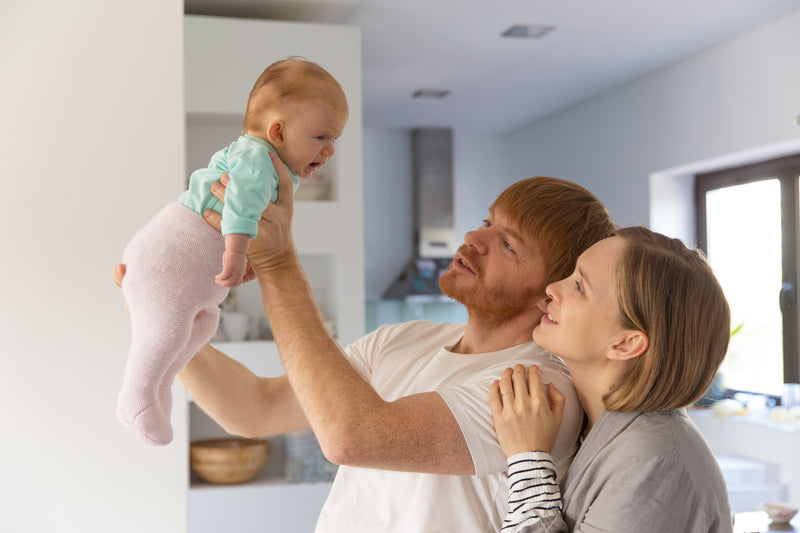
A baby’s first laugh is one of the sweetest sounds in early parenthood. After weeks of sleepy newborn expressions, tiny coos, and early smiles, that first little giggle can feel like your baby is suddenly joining the conversation.
Most babies begin to laugh somewhere around 3 to 4 months, though some babies start closer to 5 or 6 months. Early laughter may sound like a soft chuckle, squeal, breathy giggle, or short “heh” before it becomes a full belly laugh. Like many baby milestones, laughing develops on a range.
This guide explains when babies usually laugh, what baby laughter means for development, how to encourage giggles gently, what games may help, and when parents should check in with a pediatrician.
Quick Answer: When Do Babies Laugh?
Many babies begin with small giggles or chuckles around 3 to 4 months old. Bigger laughs often become more common around 5 to 6 months. Some babies laugh earlier, and some take longer, especially if they are quieter, more observant, premature, or easily overstimulated.
A simple timeline looks like this:
- Newborn stage: Sleep smiles, reflexive expressions, and tiny sounds
- 6 to 8 weeks: Social smiles often begin
- 2 to 3 months: More cooing, squealing, and face-to-face interest
- 3 to 4 months: First giggles or chuckles may appear
- 5 to 6 months: Louder laughs and repeated giggles may become more common
- 7 to 9 months: Laughter becomes more playful, social, and responsive to familiar games
If your baby is not laughing exactly at 4 months, that does not automatically mean something is wrong. Watch the full pattern: smiling, eye contact, cooing, response to sound, interest in faces, and overall development.
Baby Laughter Milestone Timeline
| Age | What You May Notice | What It Usually Means |
|---|---|---|
| 0 to 6 weeks | Sleep smiles, reflex smiles, tiny newborn sounds | Your baby’s nervous system is still maturing. |
| 6 to 8 weeks | Social smiles in response to your face or voice | Your baby is beginning to connect emotionally with familiar people. |
| 2 to 3 months | Cooing, squealing, wide smiles, excited body movement | Your baby is practicing early communication. |
| 3 to 4 months | Short giggles, chuckles, or laugh-like sounds | Early laughter may appear during playful interaction. |
| 5 to 6 months | Bigger laughs, repeated giggles, more reaction to games | Your baby is becoming more socially engaged and playful. |
| 7 to 9 months | Laughing at peekaboo, silly faces, repeated routines, gentle surprises | Your baby may begin anticipating fun and enjoying social games. |
Do Newborns Laugh?
Newborns can make little sounds, smile in their sleep, or create expressions that look like laughing, but true social laughter usually comes later. In the earliest weeks, most smile-like or laugh-like expressions are reflexive rather than intentional.
That does not mean those expressions are unimportant. They are part of your baby’s early nervous system development. Over time, your baby begins to connect your face, voice, smell, touch, and emotional tone with comfort and pleasure. Laughter grows from that foundation.

Why Do Babies Laugh?
Babies do not laugh at jokes the way adults do. In the first year, laughter is usually about connection, surprise, rhythm, sensation, and shared attention.
Your baby may laugh because:
- Your face suddenly appears during peekaboo.
- Your voice changes pitch in a silly way.
- You repeat the same playful sound several times.
- A gentle raspberry sound feels funny.
- An older sibling does something unexpected.
- You pause, smile, and build anticipation.
- A familiar game becomes predictable and exciting.
Baby laughter is also a form of communication. Before your baby can say “again,” “I like that,” or “keep playing,” laughter tells you that they are enjoying the interaction and want it to continue.
What Skills Come Before Laughing?
Laughter is not an isolated milestone. It usually appears after several earlier skills begin developing.
Before laughing, your baby may:
- Focus more on familiar faces
- Smile socially
- Turn toward your voice
- Coo or squeal
- Move arms and legs excitedly
- Recognize repeated routines
- Stay calm and alert for longer stretches
Laughing uses the body and brain together. Your baby needs enough alertness to notice you, enough emotional regulation to enjoy the moment, enough vocal control to make a laugh-like sound, and enough social interest to respond.
Why Some Babies Laugh Later Than Others
Some babies are naturally expressive and laugh often. Others are more serious, observant, or selective. Temperament matters. So does sleep, hunger, sensory sensitivity, prematurity, and timing.
A baby may laugh later if they:
- Were born early and are following adjusted age
- Need more time to warm up socially
- Are often tired or overstimulated
- Have reflux, gas, or feeding discomfort
- Prefer quiet observation over big reactions
- Need slower, softer play to feel comfortable
If your baby was premature, ask your pediatrician whether to use adjusted age when thinking about milestones. A baby born several weeks early may reach social and communication milestones later by calendar age but right on track by adjusted age.
How to Encourage Your Baby to Laugh
You cannot force a baby to laugh, and you do not need to perform all day. The best way to encourage laughter is to create warm, playful, low-pressure moments when your baby is calm and ready.
1. Start With Face-to-Face Play
Hold your baby where they can clearly see your face. Smile, raise your eyebrows, make a gentle sound, and pause. Babies often need a little processing time before they respond.
Try short phrases like:
- “Hi, baby!”
- “Where did Mommy go?”
- “Boo!”
- “I see you!”
Keep your tone warm rather than loud. For young babies, gentle surprise is usually better than big sudden noise.
2. Use Repetition
Babies love patterns. The first silly sound may get a stare. The second may get a smile. The third or fourth may finally bring a giggle.
Simple repeated games include:
- Peekaboo
- Pat-a-cake
- Gentle clapping
- Soft animal sounds
- Silly voice changes
- Short songs with the same ending each time
Repetition helps your baby learn what comes next. Sometimes the anticipation is funnier than the surprise itself.
3. Choose the Right Moment
A baby who is hungry, tired, overstimulated, wet, or uncomfortable may not laugh, even if the same game worked yesterday. Laughter usually appears in a calm-alert window.
Good times to try playful interaction include:
- After a nap
- After a feeding and burping
- After a diaper change
- During calm floor play
- When your baby is alert but not overtired
Daily care can become a natural chance for connection. If diapers, wipes, and clean clothes are easy to reach on a portable changing table, diaper changes may feel less rushed and more open to smiling, singing, and playful pauses.
The “Gentle Build-Up” Method
Many parents try to get a laugh by doing more: louder sounds, bigger tickles, faster bouncing. But babies often respond better when stimulation builds slowly.
Try this gentle sequence:
- Look at your baby and smile.
- Use a soft, familiar voice.
- Repeat one small sound or movement.
- Pause and wait for your baby’s reaction.
- Add one playful surprise, such as a funny face or soft “boo.”
- Stop if your baby turns away or seems overwhelmed.
This method works because it respects your baby’s nervous system. Laughter often happens when babies feel safe enough to enjoy surprise.
Games That May Make Babies Laugh
| Game | Best Stage | How to Keep It Baby-Friendly |
|---|---|---|
| Funny faces | 3 months and up | Use slow expressions and pause often. |
| Peekaboo | 4 months and up, often stronger later | Keep your voice soft and predictable. |
| Raspberry sounds | 3 to 6 months and up | Try sounds in the air first before gentle belly play. |
| Pat-a-cake | 5 months and up | Move slowly and support baby’s hands gently. |
| Silly songs | Any age | Repeat the same short song so baby learns the pattern. |
| Gentle lap bounce | When baby has good head control | Keep movement slow, supported, and never rough. |
What Babies Find Funny at Different Ages
3 to 4 Months: Sensory Surprise
At this stage, babies may laugh at simple sensory changes: a funny face, a new sound, a gentle “boo,” or a familiar caregiver suddenly appearing closer.
5 to 6 Months: Repeated Interaction
Your baby may begin laughing more at repeated games, silly voices, raspberries, and gentle physical play. They may also start enjoying the build-up before the funny moment.
7 to 9 Months: Anticipation
Older babies may laugh because they know what is coming next. Peekaboo, dropping a toy, or a repeated silly sound can become fun because your baby understands the pattern.
10 to 12 Months: Social Humor
Near the end of the first year, babies may laugh when someone does something unexpected on purpose, such as wearing a toy on their head or making an exaggerated mistake. They may also begin trying to make you laugh.
Can Babies Laugh in Their Sleep?
Some babies make tiny giggles, coos, or laugh-like sounds during sleep. This can happen during active sleep, when babies move, make faces, and produce small sounds.
Sleep laughter does not always mean your baby is dreaming about something funny. It may simply be part of normal sleep-related movement and sound.
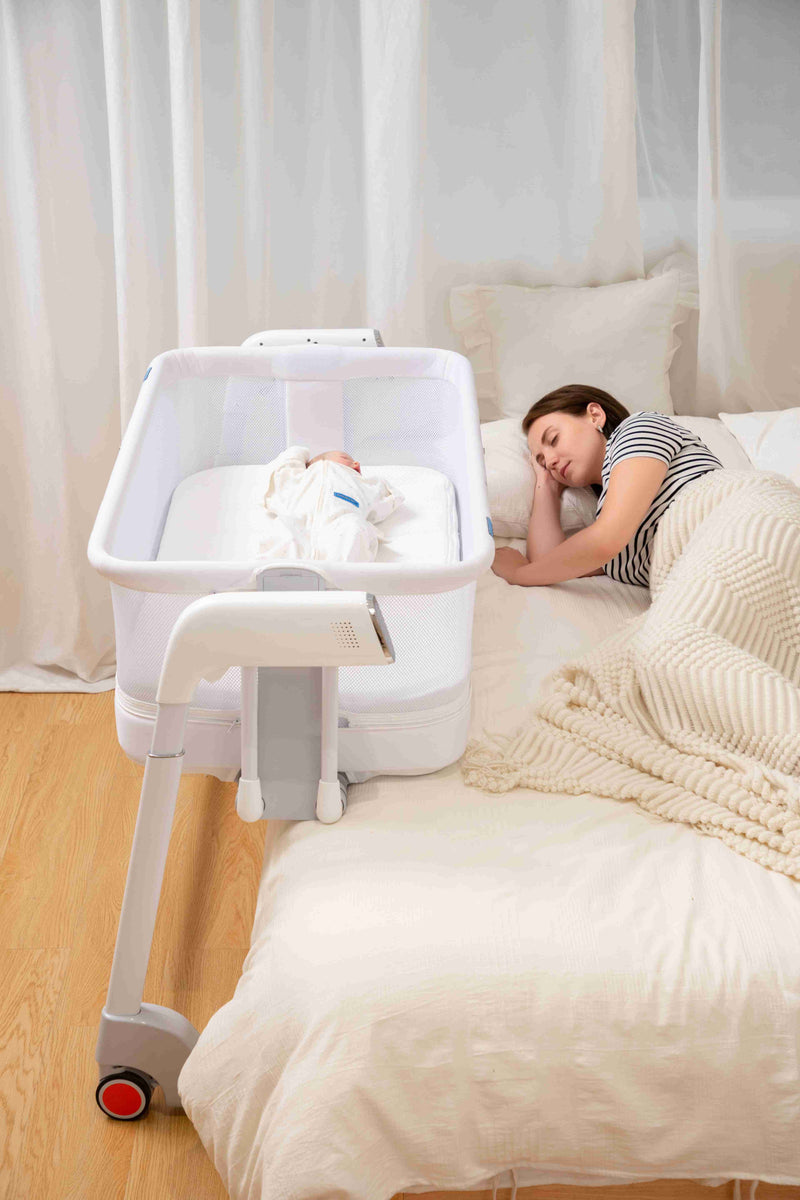
If your baby is sleeping safely, breathing normally, and not distressed, there is usually no need to wake them for small sleep sounds. If your baby sleeps near you in a smart baby crib, you may notice these little expressions more easily while still keeping your baby in a separate sleep space.
When Laughter and Sleep Are Connected
A well-rested baby is often more available for play. If a baby is overtired, the same game that brought giggles yesterday may lead to fussing today. This does not mean your baby stopped liking you or the game. It may simply mean their body needs rest.
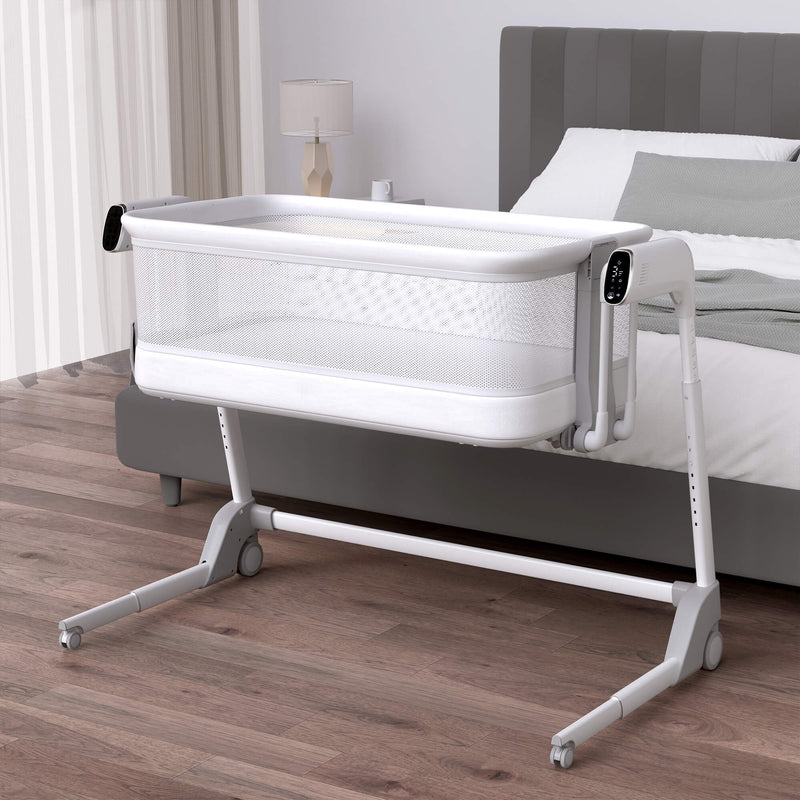
Protecting calm sleep routines can help create better awake windows for connection. A predictable rhythm of feeding, burping, changing, soothing, and safe sleep can make playtime feel easier. For families who use gentle motion as part of settling, a smart cradle may support calming routines before rest when used according to safe sleep guidance.
What Not to Do When Trying to Make a Baby Laugh
It is natural to want to hear the laugh again, but baby play should stay gentle and respectful.
- Do not tickle for too long if your baby cannot clearly signal “stop.”
- Do not use loud sudden noises near your baby’s ears.
- Do not shake, toss, or bounce your baby roughly.
- Do not keep playing if your baby turns away, cries, or stiffens.
- Do not compare your baby’s laugh timeline with another baby’s.
Baby laughter should feel connected, not forced. Your baby’s comfort matters more than getting the perfect video.

How Daily Care Can Support Social Development
Babies learn through repeated, ordinary moments. You do not need special lessons to support laughter and early communication. Feeding, diaper changes, dressing, bath time, and floor play all create chances for connection.
Try these small habits:
- Smile before picking your baby up.
- Pause after making a sound and wait for a response.
- Copy your baby’s coos.
- Use the same short song during diaper changes.
- Make one gentle funny face during tummy time.
- Let your baby lead by watching their cues.
When supplies are organized on diaper changing tables, parents may find it easier to stay present during care instead of searching for wipes, cream, or clean clothes. These small moments of calm attention can become the setting for early smiles, coos, and giggles.
When Should Parents Be Concerned?
Not laughing by exactly 4 months is not usually an emergency. But it is worth talking with your pediatrician if your baby is not laughing by around 6 months, especially if other social or communication signs are also missing.
Ask your pediatrician if your baby:
- Rarely smiles socially
- Does not respond to familiar voices
- Does not react to sounds
- Does not coo, squeal, or make social sounds
- Does not seem interested in faces
- Rarely makes eye contact in a way that feels typical for them
- Seems unusually floppy or stiff
- Has lost skills they previously had
These signs do not automatically mean something is wrong. They simply mean your baby may benefit from a closer look. Early questions can bring reassurance, hearing checks, developmental guidance, or support if needed.
What If Your Baby Smiles but Does Not Laugh Yet?
This can be completely normal. Some babies smile for weeks before their first laugh appears. Smiling, cooing, looking at faces, and responding to your voice are all meaningful social steps.
If your baby is smiling, engaging, responding to sound, and gradually becoming more vocal, laughter may simply be developing at its own pace. Keep offering playful moments without pressure.
Final Thoughts
Most babies begin laughing around 3 to 4 months, with bigger, more repeated laughs often becoming common closer to 5 or 6 months. The first laugh may be tiny, quick, or breathy, but it is still a beautiful sign that your baby is connecting with you and enjoying the world.
Encourage laughter through gentle face-to-face play, repetition, peekaboo, silly sounds, songs, and calm daily routines. Choose moments when your baby is rested, fed, changed, and alert. Let your baby lead, and stop when they need a break.
If your baby is not laughing by around 6 months, or if you notice concerns with smiling, hearing, eye contact, cooing, movement, or social engagement, ask your pediatrician. Most of the time, laughter arrives in its own timing. When it does, it becomes one of the first joyful conversations between you and your baby.
FAQ: When Do Babies Laugh?
When do babies laugh for the first time?
Many babies begin with small giggles or chuckles around 3 to 4 months. Bigger laughs often become more common around 5 to 6 months, though every baby develops at their own pace.
Can a 2-month-old baby laugh?
Some 2-month-old babies may make laugh-like sounds, squeals, or excited coos, but true laughter is more common a little later. Social smiles and cooing often come before consistent laughter.
What makes babies laugh?
Babies often laugh at familiar people, funny faces, silly sounds, peekaboo, gentle raspberries, songs, and repeated surprises. Early laughter is usually about connection, novelty, rhythm, and anticipation.
Is it normal if my 4-month-old is not laughing yet?
Yes, it can be normal. Some babies laugh around 4 months, while others need more time. Watch for other social signs such as smiling, cooing, looking at faces, and responding to familiar voices.
How can I encourage my baby to laugh?
Try face-to-face play, silly sounds, peekaboo, gentle songs, soft raspberries, and repeated games. Choose a time when your baby is rested, fed, changed, and calm. Stop if your baby turns away or seems overwhelmed.
Why does my baby laugh in sleep?
Babies may make small giggles, smiles, or coos during active sleep. This does not always mean they are dreaming about something funny. It can be part of normal sleep-related movement and sound.
When should I worry if my baby is not laughing?
Talk with your pediatrician if your baby is not laughing by around 6 months, especially if they also do not smile, respond to sound, coo, show interest in faces, or if they lose skills they previously had.
Do babies laugh before they talk?
Yes. Laughter comes long before words for most babies. It is one of the earliest forms of social communication and helps babies practice back-and-forth interaction with caregivers.