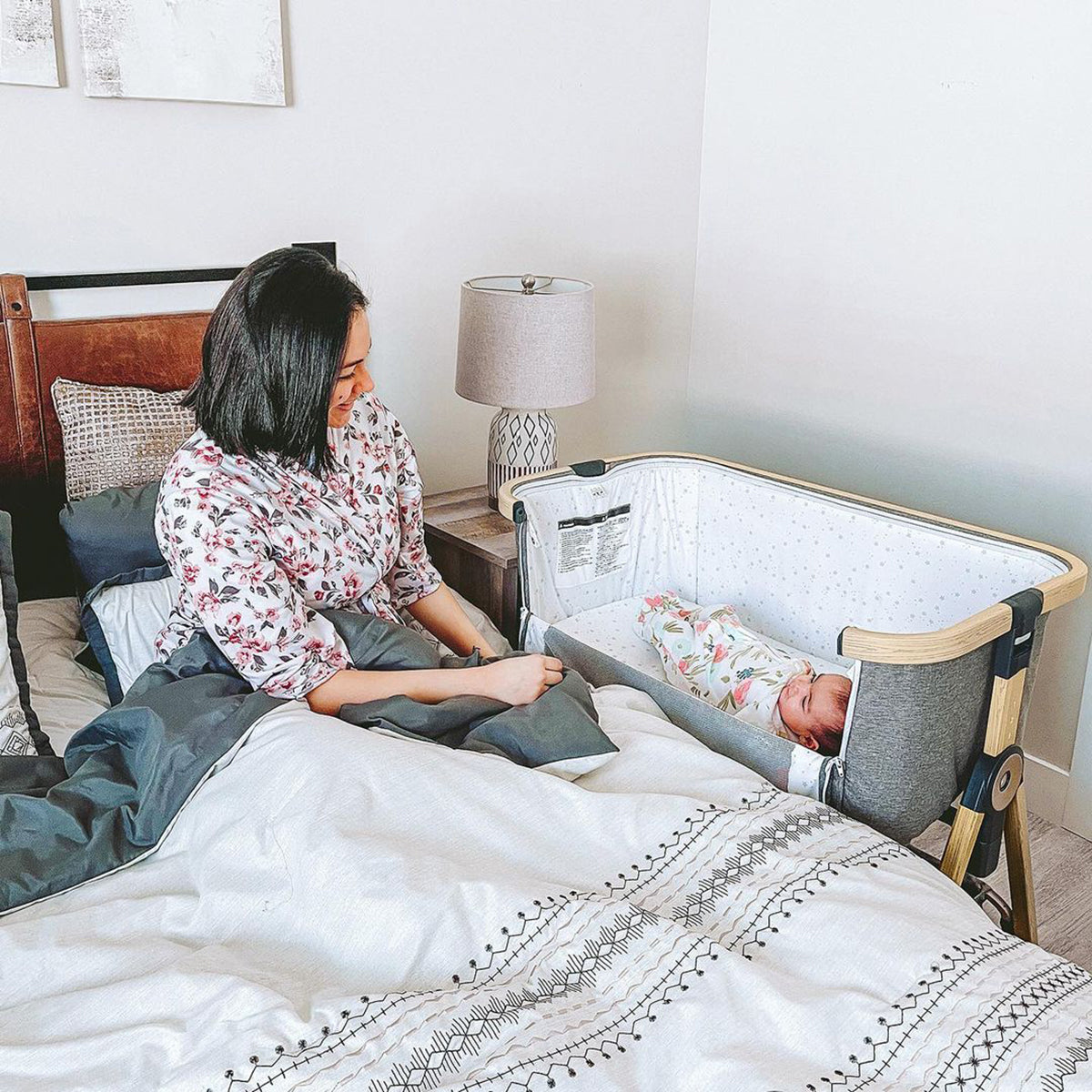
The first 12 weeks with a baby can feel like a blur of feeding, diaper changes, short naps, night wakings, tiny sounds, and surprising new moments. One day your newborn mostly sleeps and curls against your chest. A few weeks later, they may stare at your face, turn toward your voice, lift their head briefly, or surprise you with a real social smile.
Baby development in the first 12 weeks does not happen in a perfectly straight line. Some babies seem alert early. Others need more time. Some have long wake windows, while others get overwhelmed quickly. The key is to watch your baby’s overall pattern instead of comparing every single week to someone else’s baby.
This week-by-week guide explains what many babies are working on during the first 12 weeks, including movement, senses, feeding rhythms, sleep, tummy time, bonding, and signs that are worth discussing with your pediatrician.
Before You Start: Milestones Are Guidelines, Not Deadlines
Developmental milestones help parents know what to watch for, but they are not strict deadlines. A baby may smile early and lift their head later. Another may be strong during tummy time but slower to coo. Both patterns can be normal.
If your baby was born early, ask your pediatrician whether to use adjusted age when looking at milestones. For example, a baby born 4 weeks early may reach some milestones closer to their adjusted age rather than their birth age.
Most importantly, contact your pediatrician if your baby loses skills they previously had, seems unusually floppy or stiff, does not respond to loud sounds, has feeding problems, or if something simply feels wrong to you. Parents often notice subtle changes before anyone else does.
Quick Overview: First 12 Weeks of Baby Development
| Age | What Baby May Be Working On | How Parents Can Support It |
|---|---|---|
| Weeks 1–2 | Adjusting to the world, feeding, sleeping, recognizing familiar voices | Hold, feed, respond, use dim nights and brighter days |
| Weeks 3–4 | Brief alert periods, early coos, more eye contact, stronger body movements | Talk face-to-face, offer short tummy time, keep routines gentle |
| Weeks 5–8 | Social smiles, smoother movements, stronger neck control, more interest in faces | Smile, sing, respond to sounds, practice supervised tummy time |
| Weeks 9–12 | Cooing, longer wake windows, hand discovery, better head control | Offer simple play, textures, floor time, and calm interaction |
Week 1: Adjusting to Life Outside the Womb
During the first week, your baby is adjusting to feeding, breathing, digestion, light, sound, touch, and temperature changes. They may sleep most of the day and wake often for feeding. Their movements may look jerky because their nervous system is still maturing.
Your baby already knows familiar sounds, especially your voice. Talking softly during feeds, diaper changes, and cuddles helps your baby feel secure. You do not need to entertain a 1-week-old baby. Your voice, warmth, scent, and response are enough.
Parent tip
Keep care simple. Feed on cue or as your provider recommends, change diapers often, place your baby on their back for sleep, and rest when you can.
Week 2: More Looking, Listening, and Feeding Practice
By week 2, many babies have slightly longer alert windows. Your baby may briefly focus on your face during feeding or when held close. Newborn vision is still limited, so your face is most interesting when it is close.
This is also a week when feeding patterns may still feel unpredictable. Some babies cluster feed. Some need frequent burping. Some seem sleepy at the breast or bottle and need gentle support to stay awake enough to eat.
What to try
- Hold your baby close and talk slowly.
- Use gentle light during the day and dim light at night.
- Offer short, supervised tummy time on your chest if your baby tolerates it.
Week 3: More Alert Moments and Early Comfort Patterns
At week 3, your baby may begin to have more noticeable alert periods. They may look toward your face, settle to familiar touch, or respond to your smell and voice. Movements are still uncoordinated, but you may notice more stretching, kicking, and turning of the head.
This can also be a fussy time for many babies. Fussiness does not always mean you are doing something wrong. Your baby’s digestive system, sleep rhythm, and nervous system are still developing.
A calm care setup can help. Keeping diapers, wipes, burp cloths, and clean clothes nearby on a portable changing table can make repeated changes feel less chaotic, especially during postpartum recovery.

Week 4: Early Sounds and Face-to-Face Connection
Around week 4, some babies begin making small sounds beyond crying. These may sound like soft coos, sighs, or “ahh” noises. Your baby may also spend more time watching your mouth when you talk.
Responding to these early sounds matters. When your baby coos and you answer, you are building the first layer of back-and-forth communication. It may feel simple, but this is the beginning of conversation.
What to try
- Copy your baby’s sounds back gently.
- Pause after you speak, giving your baby time to respond.
- Use diaper changes as short face-to-face play moments.
Week 5: Smoother Movement and Stronger Body Awareness
By week 5, some babies begin moving a little more smoothly. Their arms and legs may still flail, but their movements can seem less random than before. You may notice more stretching after sleep, more kicking during alert time, and more effort to turn toward interesting sounds.
This is a good time to continue short tummy time while your baby is awake and supervised. Tummy time does not need to be long. A few short sessions are often better than one long frustrating one.
Parent tip
Try tummy time when your baby is calm, not immediately after a large feeding and not when they are already overtired.
Week 6: The Social Smile May Appear
Week 6 is exciting because many babies begin showing a more noticeable social smile around this stage. Unlike sleepy newborn smiles, social smiles often happen when your baby sees your face, hears your voice, or feels engaged with you.
Not every baby smiles at exactly 6 weeks. Some smile earlier, some later. Look for the broader pattern: Does your baby look at faces? Calm to your voice? Become more alert during interaction?
If your baby sleeps close to you in a newborn rocking bassinet, those early morning wake-ups may become sweet moments for quiet smiling, soft talking, and gentle bonding before the day begins.
Week 7: Senses Become More Connected
At week 7, babies often become more interested in sound, light, faces, and simple objects. Your baby may look toward a rattle, follow your face briefly, or seem more engaged when you speak in a high, gentle voice.
This is a good time to introduce simple sensory experiences. Think high contrast, gentle sound, soft textures, and slow movement. Babies do not need flashing toys or loud music. They need clear, calm input they can process.
What to try
- Move a simple toy slowly from side to side.
- Sing the same short song each day.
- Let your baby feel soft fabric, a crinkle book, or your clean fingers.
Week 8: Better Head Lifting During Tummy Time
By week 8, many babies are working on lifting their head more during tummy time. They may briefly raise the head, turn it from side to side, or push slightly through their arms.
Neck strength develops gradually. If your baby dislikes tummy time, try changing the position. Tummy time can happen on your chest, across your lap, or on a firm floor mat while you lie nearby.
One expert tip is to think of tummy time as “many tiny practices,” not one workout. Thirty seconds repeated several times a day can be more successful than forcing a long session that ends in crying.
Week 9: More Cooing and Sound Play
Around week 9, babies may become more vocal. You may hear coos, gurgles, squeals, or little conversation-like sounds. Your baby may watch your mouth closely when you speak and seem excited when you respond.
This is a powerful time for language development. You do not need special lessons. Narrate daily life: “We are changing your diaper,” “Here is your clean sleeper,” “You heard the door,” or “I see your hands moving.”
Everyday care creates language moments. When supplies are organized on diaper changing tables, parents can focus more on talking, smiling, and responding instead of searching for wipes or clothes.
Week 10: Recognizing Familiar Faces
By week 10, many babies become more expressive with familiar people. Your baby may brighten, wiggle, smile, or become more alert when you come close. They may also prefer your face and voice over unfamiliar people.
This is not “clinginess” in a negative sense. It is attachment developing. Your baby is learning who keeps them safe, fed, warm, and comforted.
What to try
- Use predictable greetings when your baby wakes.
- Let your baby watch your face during songs.
- Pause during play to let your baby respond.
Week 11: Longer Wake Windows and More Overstimulation
At week 11, some babies are awake for longer stretches. This can be fun, but it can also lead to overstimulation. Your baby may look away, arch, fuss, yawn, hiccup, or become suddenly upset when they need a break.
A key insight for this age is that development is state-dependent. Babies show their best skills when they are in the right state: calm, alert, fed, comfortable, and not overtired. If your baby does not “perform” a milestone when relatives visit, that does not mean the skill is gone. They may simply be tired or overwhelmed.
If soothing and rest routines are part of your day, a smart cradle can help create a consistent calming space before or after busy awake periods.
Week 12: Hands, Head Control, and More Social Interaction
By week 12, many babies are fascinated by their hands. They may bring hands together, stare at fingers, open and close their hands, or bring hands toward the mouth. These are early steps toward reaching, grasping, and exploring objects.
Your baby may also have better head control than in the early newborn weeks. During tummy time, they may lift the head longer, push through the forearms, or turn toward your voice.
Socially, your baby may smile more, coo back and forth, and enjoy familiar routines. This is often when parents begin to feel that their baby is becoming more interactive and expressive.
Development Domains to Watch in the First 12 Weeks
Movement
Look for gradual changes: less jerky movement, more head lifting, more kicking, and more purposeful hand movement. Always support your baby’s head and neck until control is stronger.
Communication
Crying is still communication, but coos, gurgles, smiles, and eye contact become more noticeable. Responding warmly teaches your baby that their sounds and expressions matter.
Social and Emotional Growth
Your baby learns safety through repeated care. Feeding, rocking, diaper changes, and soft talking all build trust. You cannot spoil a newborn by responding to their needs.
Sensory Development
Your baby is learning through light, sound, touch, smell, and movement. Keep stimulation gentle. If your baby turns away, fusses, or stiffens, pause and let them reset.

How to Support Development Without Overdoing It
New parents often feel pressure to “do enough.” But in the first 12 weeks, development is supported by simple, repeated care.
- Talk often: Narrate feeding, changing, dressing, and walking around the house.
- Offer tummy time: Use short, supervised sessions while your baby is awake.
- Respond to cues: Pick up, comfort, feed, and soothe your baby when they need you.
- Use face-to-face time: Your face is one of your baby’s favorite learning tools.
- Keep routines predictable: Small patterns help babies feel secure.
- Protect sleep: Growth and development need rest.
You do not need flashcards, complex toys, or a packed activity schedule. Your baby learns through everyday connection.
Sleep, Feeding, and Diaper Changes in the First 12 Weeks
The first 12 weeks are often less about a strict schedule and more about slowly finding rhythms. Many babies still wake often at night, feed frequently, and need many diaper changes. Some begin showing slightly more predictable patterns by the end of the third month, but variation is normal.
Focus on small routines instead of rigid schedules:
- Use bright natural light during the day.
- Keep nighttime care dim and quiet.
- Place your baby on their back for sleep.
- Use a firm, flat sleep surface.
- Keep loose blankets, pillows, and soft objects out of the sleep space.
- Restock diaper and feeding supplies before bedtime.
A safe sleep setup and organized care space can make the first months feel smoother. If you are preparing a bedside area, a 3 in 1 bassinet crib can support close nighttime care while keeping baby in a separate sleep space.
When to Ask Your Pediatrician
Every baby develops differently, but some signs should be discussed with your child’s doctor. Reach out if your baby:
- Does not respond to loud sounds
- Does not watch things move by around 2 months
- Does not smile at people by around 2 months
- Does not bring hands toward the mouth
- Cannot hold the head up at all during tummy time by around 2 months
- Has very poor feeding or weak sucking
- Seems extremely floppy or unusually stiff
- Has lost a skill they previously had
- Has fewer wet diapers than expected
- Has a fever or any symptom your provider told you to watch for
You do not need to wait for a scheduled visit if you are worried. Early questions are part of good care.
Final Thoughts
The first 12 weeks are full of tiny changes: a longer gaze, a stronger lift of the head, a new coo, a real smile, a hand discovered for the first time. These moments may seem small, but together they show your baby’s brain, body, and relationships growing every day.
Use this guide as a gentle map, not a test. Your baby does not need to match every week perfectly. What matters most is steady progress, responsive care, safe sleep, feeding support, supervised tummy time, and regular check-ins with your pediatrician.
In these early weeks, your everyday care is the activity. Holding, feeding, changing, talking, singing, and responding are not just tasks. They are how your baby learns the world is safe, loving, and full of connection.
FAQ: Baby Development in the First 12 Weeks
What should a baby do in the first 12 weeks?
In the first 12 weeks, many babies begin focusing on faces, responding to familiar voices, making cooing sounds, smiling socially, lifting their head briefly during tummy time, and becoming more alert during wake windows.
When do babies start smiling?
Many babies begin showing social smiles around 6 to 8 weeks, though some smile earlier or later. Social smiles often happen when a baby sees a familiar face or hears a familiar voice.
When should tummy time start?
Tummy time can begin early with short, supervised sessions while your baby is awake. Many newborns do best with tummy time on a caregiver’s chest or lap before moving to floor time.
How much tummy time does a 2-month-old need?
There is no perfect number for every baby. Start with short sessions and gradually increase as your baby tolerates it. Several brief sessions throughout the day are often easier than one long session.
When do babies start cooing?
Some babies begin making cooing or gurgling sounds around 1 to 2 months. Responding to these sounds helps build early communication and back-and-forth interaction.
Is it normal if my baby does not follow this week-by-week timeline?
Yes. Babies develop at different speeds. Use week-by-week guides as general expectations, not strict deadlines. If your baby was born early, ask your pediatrician about adjusted age.
What toys are best for the first 12 weeks?
Simple toys are best: high-contrast cards, soft rattles, crinkle books, textured cloths, and your face and voice. Babies at this age do not need loud, flashing, or overly stimulating toys.
When should I worry about baby development?
Talk with your pediatrician if your baby does not respond to loud sounds, does not watch movement, does not smile at people by around 2 months, cannot lift the head at all during tummy time, seems very floppy or stiff, feeds poorly, or loses skills they once had.