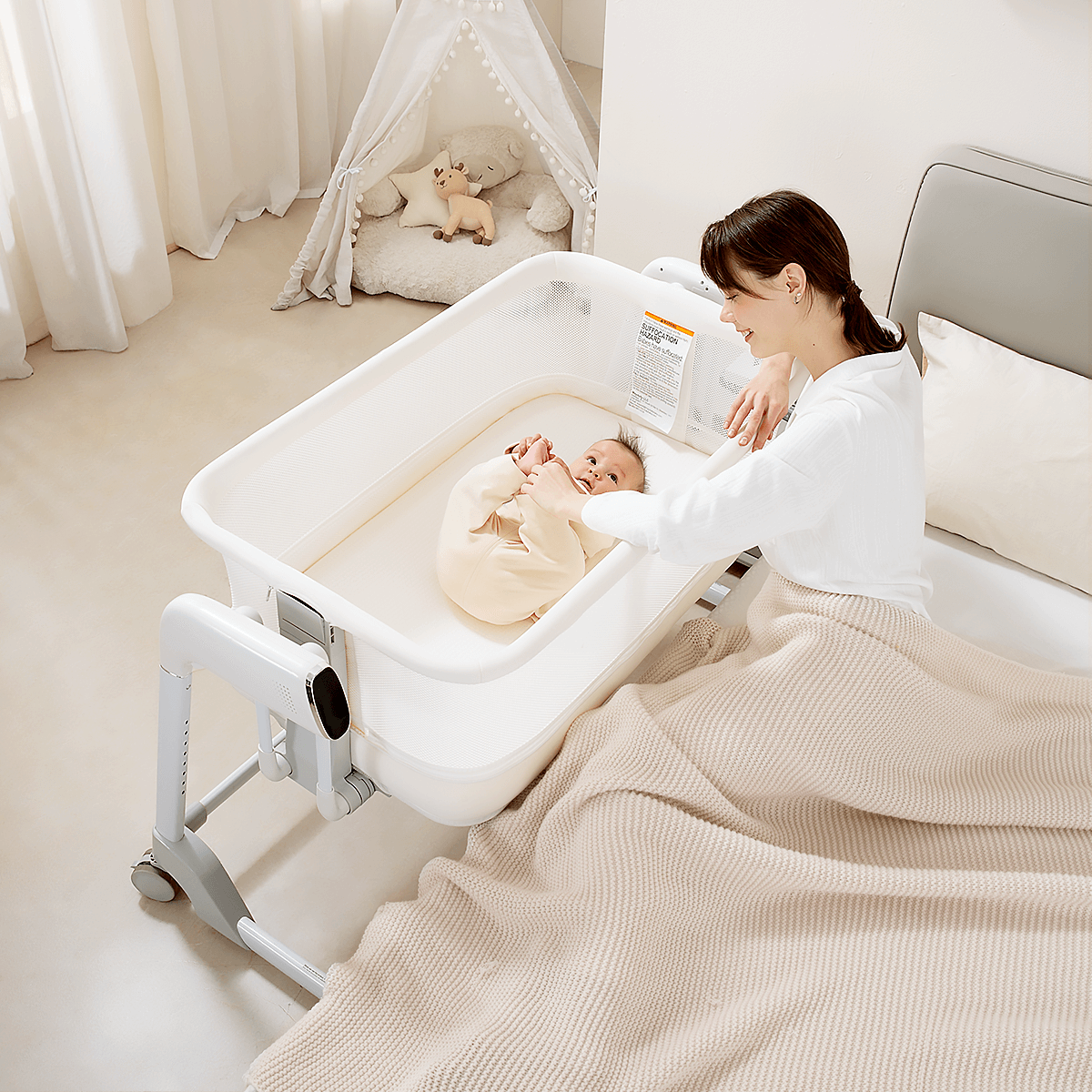
Night feeds can feel like a blur in the newborn stage. Your baby wakes, you reach for a burp cloth, realize the clean diapers are across the room, search for nipple cream, and then discover the wipes are almost empty. A nursing cart solves one simple but powerful problem: it keeps the things you need most within arm’s reach when you are tired, recovering, and caring for a tiny baby around the clock.
A nursing cart is a portable care station for feeding, pumping, diaper changes, and parent comfort. It can sit beside your bed at night, roll into the nursery during the day, or stay near your favorite feeding chair. The best setup is not the fullest cart. It is the one that helps you complete the same repeated tasks with less searching, less stress, and fewer bright-light trips across the room.
This guide shows you how to set up a practical nursing cart for night feeds and diaper changes, what to put on each tier, what to avoid, and how to keep it stocked as your baby grows.
What Is a Nursing Cart?
A nursing cart is a small rolling storage cart, usually with two or three shelves, used to organize baby care and feeding supplies. Despite the name, it is not only for breastfeeding parents. It can be used for bottle feeding, pumping, diaper changes, postpartum recovery, or a combination of all of these.
Think of it as a mini care station. Instead of storing diapers in one drawer, burp cloths in another room, snacks in the kitchen, and pump parts on the dresser, a nursing cart brings the essentials into one predictable place.
A nursing cart is especially useful if:
- You feed your baby overnight.
- You are recovering from birth and want fewer trips around the house.
- You live in a smaller home or apartment.
- You want a temporary baby station without buying large furniture.
- You need supplies near both your sleep space and the nursery.
Why a Nursing Cart Helps at Night
Newborn care is repetitive. Feed, burp, change, soothe, settle, repeat. During the day, this routine can feel manageable. At 2 a.m., when everyone is tired and the room is dark, small inconveniences feel much bigger.
A well-organized nursing cart helps because it reduces decision fatigue. You do not have to remember where everything is. You simply reach for the same shelf, the same bin, and the same supplies every time.
There is also a sleep reason. The fewer disruptions you create during night care, the easier it is for your baby to return to sleep. Bright lights, searching through drawers, talking loudly, or walking from room to room can turn a sleepy feed into a full wake-up. A nursing cart helps you keep night care quiet, efficient, and low-stimulation.
How to Choose the Right Nursing Cart
You do not need an expensive cart. What matters most is that it fits your space and daily routine.
Look for Three Practical Features
- Three tiers: This gives you enough space to separate feeding, parent care, and diapering supplies.
- Smooth wheels with locks: Wheels make the cart flexible, while locks help keep it stable during use.
- Easy-to-clean material: Metal or wipeable plastic is often easier to maintain than fabric or unfinished wood.
Measure Before You Buy
Before choosing a cart, measure the space beside your bed, nursery chair, or changing area. A cart that blocks the walkway will become annoying quickly. You want it close enough to reach, but not so close that it becomes a trip hazard during nighttime care.
Use Bins Instead of Loose Items
Small bins, baskets, or drawer organizers make a huge difference. They stop items from sliding around and help you group supplies by task. You can create one bin for feeding, one for diapering, one for parent essentials, and one for backup items.

The Best Nursing Cart Layout: Top, Middle, Bottom
The easiest way to organize a nursing cart is by frequency of use. Put the most urgent items at the top, comfort items in the middle, and bulkier backup supplies at the bottom.
| Cart Level | Best Use | Examples |
|---|---|---|
| Top Tier | Items you need immediately during feeds | Burp cloths, water bottle, nursing pads, nipple cream, bottle, pacifier |
| Middle Tier | Parent comfort and feeding support | Snacks, pump parts, milk storage bags, phone charger, hair tie |
| Bottom Tier | Diapering and backup baby care | Diapers, wipes, diaper cream, changing pad, extra sleeper, wet bag |
This structure works because it follows the actual order of night care. First, you respond to the baby. Then you feed and support yourself. Then you change, clean, and reset.
Top Tier: Night Feed Essentials
The top tier should hold whatever you need while feeding your baby. These items should be easy to grab with one hand.
- Burp cloths
- Nursing pads
- Nipple cream
- Clean bottle if bottle feeding
- Formula dispenser if formula feeding
- Pacifier, if your baby uses one
- Small night light
- Water bottle for the parent
- Phone charger or timer if you track feeds
If you pump, use a small bin for pump parts, milk storage bags, and clean collection bottles. Keep anything that touches milk clean and separate from diapering supplies.
Middle Tier: Parent Comfort and Recovery
Newborn care often focuses so much on the baby that parent comfort becomes an afterthought. But night feeds are easier when the feeding parent has what they need too.
The middle tier can include:
- Easy one-handed snacks
- Electrolyte packets or a water bottle refill
- Lip balm
- Hair ties or clips
- Hand sanitizer
- Small notebook or medication log if needed
- Postpartum care items recommended by your provider
- A lightweight blanket or cardigan
A useful rule is to pack items that help you stay seated, hydrated, and calm. If every feed sends you to the kitchen, bathroom, or nursery drawer, your cart is missing something.
Bottom Tier: Diaper Change Essentials
The bottom tier is ideal for diapering supplies because these items are often bulkier and easier to restock in groups.
- Current-size diapers
- Wipes
- Diaper cream
- Disposable or washable changing liner
- Wet bag or small trash bags
- Extra baby sleeper
- Extra socks or mittens
- Small pack of the next diaper size
If you already use a portable changing table, the nursing cart can work as a mobile refill station beside it. Keep the cart close enough to reach supplies, but always change your baby on a stable, safe, flat surface.
Where Should You Put a Nursing Cart?
The best location depends on your routine. Some parents keep the cart beside the bed. Others place it next to the nursery chair, near the changing area, or between two rooms.
Beside the Bed
This is helpful for nighttime feeding, especially in the first few weeks. Keep the cart on the side where the feeding parent can reach it without standing up. If your baby sleeps nearby in a newborn rocking bassinet, place the cart close enough for supplies but far enough that blankets, cords, and loose items cannot fall into the baby’s sleep space.
Near the Changing Area
If diaper changes are the most difficult part of the night, place the cart beside your changing surface. Parents who use diaper changing tables often find it helpful to store daily essentials on the table and backup supplies on the cart.
Next to a Feeding Chair
If you feed in a nursery chair, keep the cart on your dominant-hand side. This makes it easier to grab a burp cloth, water bottle, or pacifier without twisting your body while holding the baby.
Night Feed Setup: A Simple Step-by-Step Routine
The goal of nighttime care is not just to complete the feed. It is to help your baby return to sleep with as little stimulation as possible.
- Prepare the cart before bedtime. Restock diapers, wipes, burp cloths, and feeding supplies.
- Use dim light only. A soft night light is usually enough for feeding and diaper checks.
- Keep voices low. Gentle reassurance is fine, but avoid playful interaction.
- Feed first if baby is very upset. Some newborns settle better when hunger is addressed before a full diaper change.
- Change poop diapers right away. For lightly wet diapers, decide based on comfort, fullness, and rash risk.
- Resettle with the same cues each time. Swaddle if appropriate, use white noise if part of your routine, and return to a safe sleep space.
If you use a smart cradle as part of your nighttime routine, keep the nursing cart nearby so feeding and diaper supplies are ready before you start soothing your baby back to sleep.
The “Clean Zone” and “Messy Zone” Rule
One detail many nursing cart guides miss is hygiene zoning. A nursing cart often holds both feeding items and diapering items, so you need a simple separation system.
Create two zones:
- Clean zone: Bottles, pump parts, milk storage bags, pacifiers, nipple shields, snacks
- Messy zone: Diapers, wipes, diaper cream, wet bags, used burp cloth storage
Never store clean bottle nipples or pump parts loose on the same shelf as diaper cream, wipes, or trash bags. Use lidded containers or zip pouches for anything that touches milk or your baby’s mouth.
This is especially helpful during night feeds, when tired parents are more likely to place items down quickly without thinking.
What Not to Put on a Nursing Cart
A nursing cart should be useful, not cluttered. Avoid turning it into a catch-all storage tower.
- Do not store unsafe sleep items such as loose blankets, pillows, or stuffed toys meant for the baby’s sleep space.
- Do not overload the top shelf with heavy items that could fall.
- Do not leave medicine within reach of older siblings or visiting children.
- Do not keep open snacks near diapering supplies.
- Do not let cords hang loosely where they can be pulled or tangled.
If the cart becomes hard to roll, difficult to clean, or too crowded to find anything, remove items rather than adding more organizers.

Nursing Cart vs. Changing Table: Do You Need Both?
A nursing cart and a changing table solve different problems. A nursing cart is mobile storage. A changing table is a stable surface for diaper changes.
You may benefit from both if you want diapering supplies near your bed at night and a more complete changing setup in the nursery. A foldable changing table can be a practical choice for families who want a dedicated diaper-changing surface without giving up permanent floor space.
If you have limited room, you can use the cart as a supply station and keep a separate foldable changing pad for safe changes on an appropriate surface. Never change your baby on the top of a rolling cart.
How to Restock Your Nursing Cart
A nursing cart only works if it stays stocked. The easiest system is a two-minute reset every evening.
Daily Restock
- Add 6 to 8 diapers for overnight and early morning.
- Refill wipes if the pack feels low.
- Add two clean burp cloths.
- Replace used baby clothes.
- Wash or remove used bottles and pump parts.
- Restock parent snacks and water.
Weekly Reset
- Wipe down shelves and bins.
- Check diaper size and remove outgrown diapers.
- Wash reusable changing liners.
- Review feeding supplies as your baby’s needs change.
- Move rarely used items out of the cart.
A cart that is reset daily becomes part of your rhythm. A cart that is ignored becomes another place where baby items disappear.
Small-Space Nursing Cart Ideas
If you live in an apartment, share a bedroom with your baby, or have a compact nursery, you can still create a useful setup.
- Choose a narrow cart instead of a wide one.
- Use vertical bins to save shelf space.
- Store only one night’s worth of diapers at a time.
- Use hanging side cups for pacifiers, cream, or hair ties.
- Keep backup supplies in a closet and refill the cart daily.
For very small spaces, a diaper caddy may work better than a cart. The idea is the same: keep essentials grouped by task and close to where care happens.
Safety Tips for Using a Nursing Cart
A nursing cart is convenient, but it should be used thoughtfully.
- Lock the wheels when the cart is parked.
- Keep the cart away from stairs.
- Place heavier items on the bottom shelf.
- Keep cords wrapped and away from the baby.
- Do not let toddlers climb or pull on the cart.
- Do not place hot drinks on the cart while holding your baby.
- Keep small items such as bottle caps and pacifier clips in closed containers.
As your baby becomes mobile, reassess the cart. What worked for a newborn may need to be moved higher, locked away, or removed once your baby starts rolling, crawling, or pulling to stand.
Complete Nursing Cart Checklist
Feeding Supplies
- Burp cloths
- Bottles or nursing supplies
- Formula dispenser, if used
- Pump parts, if used
- Milk storage bags
- Nursing pads
- Nipple cream
- Pacifiers
Diapering Supplies
- Diapers
- Wipes
- Diaper cream
- Changing liner
- Wet bag
- Extra sleeper
- Extra socks
Parent Supplies
- Water bottle
- One-handed snacks
- Phone charger
- Lip balm
- Hair tie
- Hand sanitizer
- Small night light
Final Thoughts
A nursing cart does not need to be perfect or beautiful to be useful. It only needs to support the real moments you repeat every day: feeding, changing, soothing, and resetting.
Start simple. Choose a cart that fits your space, divide it into feeding, parent care, and diapering zones, and restock it every night. As your baby grows, adjust what you keep inside. The newborn stage is intense, but small systems like this can make night feeds and diaper changes feel calmer, safer, and more manageable.
FAQ: Nursing Cart Setup for Night Feeds and Diaper Changes
What should I put in a nursing cart?
A nursing cart should include feeding supplies, diapering supplies, and parent comfort items. Common essentials include diapers, wipes, diaper cream, burp cloths, bottles or nursing supplies, pacifiers, water, snacks, a phone charger, and a small night light.
Do I need a nursing cart if I already have a changing table?
Not always, but the two serve different purposes. A changing table gives you a stable diaper-changing surface, while a nursing cart keeps supplies mobile and within reach. Many parents use both during the newborn stage.
Where should I keep a nursing cart at night?
Keep it near the place where you feed your baby most often, such as beside the bed or next to a nursery chair. Make sure it does not block walking paths and keep it away from the baby’s sleep surface.
Can a nursing cart be used for bottle feeding?
Yes. A nursing cart can be used for breastfeeding, pumping, formula feeding, or combination feeding. Store clean bottles, formula portions, burp cloths, pacifiers, and feeding notes in a clean, separate section.
How do I keep a nursing cart clean?
Separate feeding items from diapering items, use bins or pouches, wipe shelves weekly, remove used burp cloths daily, and wash bottles or pump parts promptly. Keep clean milk-related items in closed containers.
How many diapers should I keep on a nursing cart?
For overnight and early morning care, 6 to 8 diapers is usually a practical starting point for a newborn. Restock daily so the cart stays ready without becoming overcrowded.
Can I change my baby on top of a nursing cart?
No. A nursing cart is for storage, not for diaper changes. Always change your baby on a safe, stable, flat changing surface and keep one hand on your baby during changes.
When should I stop using a nursing cart?
You can use it as long as it helps your routine. Many families repurpose a nursing cart later for toys, books, bath supplies, toddler snacks, or art materials once the baby no longer needs frequent night feeds and diaper changes.